In the high-tech agriculture sector, producing F1 hybrid seeds that meet strict standards for purity and germination rate is always a major challenge for many businesses. At Lam Tai Vegetable Seed Production Co., Ltd (Duc Trong, Lam Dong), we are proud to apply a closed self-production farm model (SOP, KPI) combined with an ERP software system since 2009 to strictly control from the stage of germinating original seeds to export.
This article below will explain in detail the F1 hybrid seed germination process for the Solanaceae family, chili (tomato, hot chili, sweet chili...) professional export standard at Lam Tai.
1. Receiving and Processing Original Seeds (Parent Lines)
After signing the foreign trade contract and completing legal procedures, international customers will send original seeds (including both parent lines) to Lam Tai factory. The initial processing procedure is carefully performed to maximize germ activation:
Coding & Classification: Original seeds are assigned unique identification codes, classified and stored in specialized storage.
Original seed soaking process:
-
Rinse seeds thoroughly with clean water.
-
Soak seeds in warm water at 40°C for 2 hours to break dormancy state.
-
Soak in 10% TSP disinfectant solution for 1 hour, then rinse thoroughly with water.
-
Wrap seeds with a clean moist cloth and place into a specialized germination cabinet.
-
Standard germination time: For tomato seeds it is 2 days, for chili varieties it is from 3 to 4 days. When seeds crack and germinate evenly, they are immediately transferred to the nursery for thinning.
2. Preparation Work for the Net House for Planting with 100% Sterilization Standard
To ensure the goal of F1 seeds free from infectious diseases (achieving 0% pest transmission rate), cleaning and sterilizing the net house before each cultivation season is mandatory at Lam Tai.
The empty house preparation process includes the following strict steps:
-
Cleaning the site: Remove all old pots, old plants, hanging wires, waste and old substrates outside.
-
Clean the system: Use high-pressure clean water combined with a brush to scrub the drainage channels clean.
-
Treat irrigation system: Flush drip irrigation system with 10% HCl acid solution for 24 hours, then remove and rinse thoroughly under cold water tap.
-
Surface sterilization spray: Spray 2% Virkon solution (at least twice) on all frame structures and greenhouse membranes.
-
Eliminate intermediate pests: Spray special pesticides for thrips, red mites, caterpillars, planthoppers, whiteflies (3 times) for the entire net house space and surrounding mesh system.
-
Arrange new materials: Put new substrate (already tested) into trays/pots, hang blue and yellow insect traps along the aisles.
-
Final preventive spraying: Spray thrips prevention 2 more times right before transplanting seedlings and sterilize all tools in the buffer room (Lock).
3. Seedling Germination Stage at Lam Tai Nursery
Healthy seedlings are the foundation for superior F1 seed yield. This stage requires high accuracy in soil selection and care techniques:
Tray and sowing soil preparation:
-
Use 100-hole plastic seedling trays sterilized by soaking in 10% Javen solution for 1 day, rinsed 3 times with water and dried.
-
Use clean organic soil BVB imported from the Netherlands to fill trays and make sowing holes with specialized tools.
Sowing thinning and seedling care techniques:
-
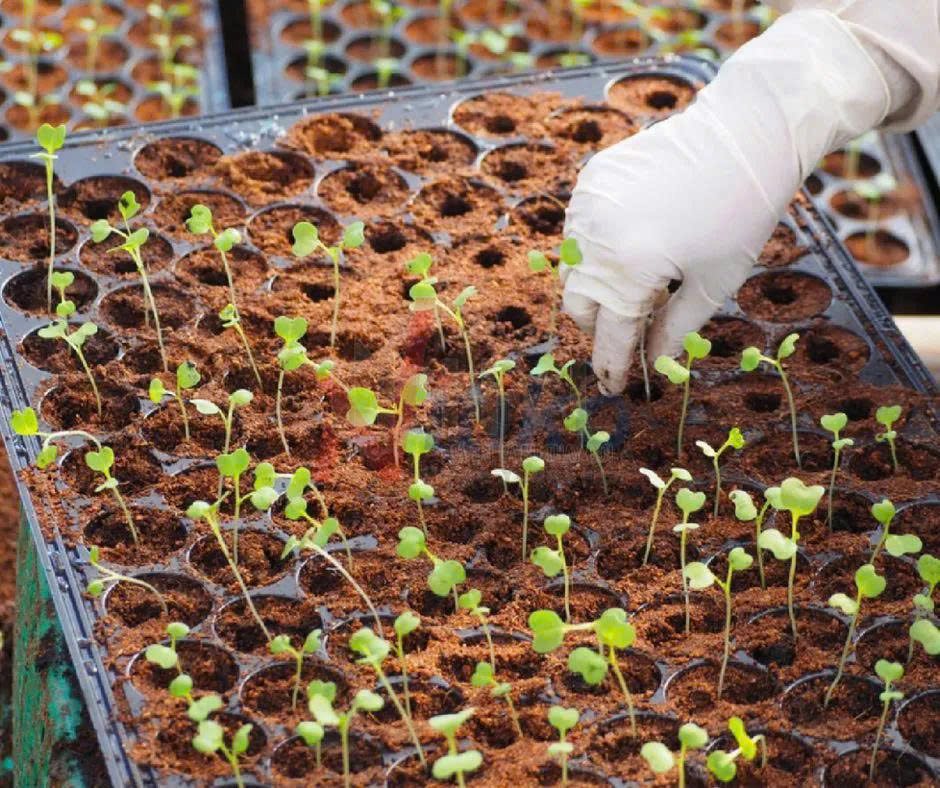
Workers manually thin each germinated seed into holes (only 1 seed per hole).
-
After thinning, trays are placed under mist irrigation for 3 - 5 minutes to stabilize moisture.
-
Apply plant protection chemicals (PP) periodically every 5 days using specialized pesticides such as M8, Acrobat, Dithan (dose about 30-35g per 16-liter sprayer) to prevent fungal diseases.
-
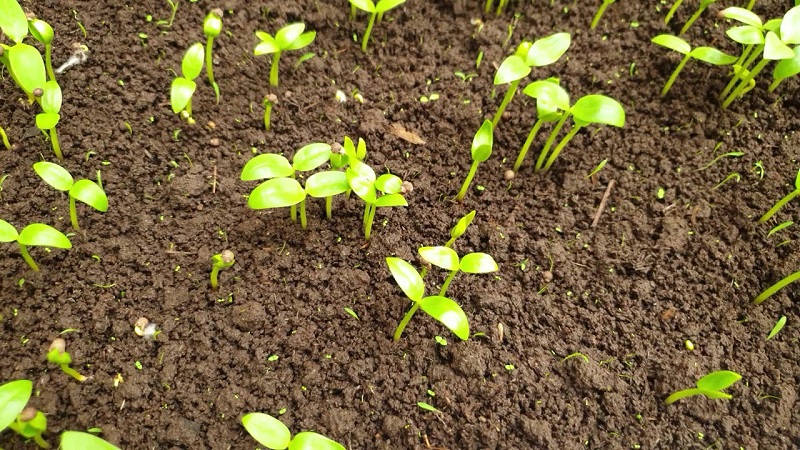
Export standard from nursery: Continuously screen and remove stunted, deformed or off-type seedlings. When reaching export age (20 - 25 days for tomato and 30 - 35 days for chili), seedlings will be transferred to the production net house for planting.
4. Techniques for Planting and Caring for Parent Plants Outside the Net House
When seedlings reach the appropriate age, the handover and field planting process is thoroughly implemented:
-
Input inspection: The lot owner inspects and accepts the seedling trays, accurately checks quantity and variety codes before signing acceptance and planting into substrate.
-
Nutrition & Plant protection: The automatic drip irrigation system supplies water and fertilizer according to optimal formulas for each growth stage through strict control of EC (electrical conductivity), pH and water volume. Plant protection chemicals are sprayed periodically every 5 - 7 days.
Strict infectious virus control (TMV):
-
Every 5 days, workers check and perform rapid tests to detect TMV virus (usually spread by thrips).
-
Safe destruction procedure: When diseased plants are detected, workers wear gloves, use specialized scissors to cut off the base and immediately put into trash bags to prevent disease spreading to healthy plants. After each cut, scissors must be soaked in a bucket containing 0.2% Virkon solution or 0.1% Physan solution for disinfection.
Technical management:
-
Install fixed strings to support plant stems, strictly isolate different varieties to avoid unwanted cross-pollination. Workers prune branches, remove self-pollinated flowers (OP), naturally opened flowers must wear gloves and disinfect hands with disinfectant solution after each plant to avoid cross-infection. All data is recorded in digital logs.
5. Pollination and Hybridization Process for F1 Seeds
This is the core stage determining the purity (required to reach 98% or higher) of Lam Tai F1 hybrid seeds. The pollination time is about 20 - 25 days after planting for tomato and 40 days for chili.
Preparation before hybridization:
Staff training: Hybridization workers must be trained proficiently in the process of flower emasculation, pollen application and strictly comply with the "8 dos and don'ts":
-
Do not allow flowers to self-open.
-
Do not emasculate already opened flowers.
-
Do not emasculate flowers that have released pollen early.
-
Do not emasculate twin flowers.
-
Do not allow pollen bags to fall and stick on leaves.
-
Do not emasculate and withdraw flowers.
-
Must continuously sterilize tweezers.
-
Absolutely do not miss any pollen bags.
Flower source sanitation: Thoroughly remove self-pollinated flowers (OP), naturally opened flowers, check if the pollen amount of the parent line is sufficient and greenhouse temperature reaches ideal level (28°C). This flower sanitation process is cross-checked through 3 levels: Lot owner ➔ Supervisor ➔ Quality Assurance (QA) department for final acceptance.
Specialized tools: Prepare medical gloves, pollen bags, test tubes, tweezers, 75° alcohol (to kill mother pollen when emasculating flowers), 0.1% Physan or 0.5% TSP solution to sterilize tools to prevent virus transmission.
Steps for manual hybridization:
-
Step 1 (Mother flower emasculation): Select flowers at the right physiological age (not too young or old). Use sterilized tweezers to remove 1/3 of petals including anthers, then cleanly remove remaining petals and pollen bags. Use colored wool to mark the emasculation date.
-
Step 2 (Pollination): After emasculation for 24 hours, apply pollen from the parent line onto the emasculated mother flower stigma. Use colored wire to mark flowers that have been successfully pollinated.
-
Execution time: The hybridization stage lasts from 15 - 20 days for sweet/hot chili, and from 45 - 50 days for tomato varieties.
6. Fruit Cultivation Stage After Pollination
After the pollination period ends, all self-pollinated flowers (OP) and late-blooming flowers remaining on the plant will be completely removed to focus nutrients on cultivating F1 hybrid fruits.
-
Supplementary nutrition regime: Besides periodic drip irrigation, add potassium and calcium-rich fertilizers to promote even fruit growth, reduce fruit cracking or blossom-end rot.
-
Pest and disease prevention: Maintain regular spraying of plant protection chemicals every 7 - 10 days to thoroughly control thrips, fruit borers and fungal diseases.
-
Yield assessment: Conduct measurements and second yield assessment (40 days after pollination ends) as a basis to update accurate data sent to customer partners.
With the closed F1 hybrid seed germination and production process meeting international SOP standards, Lam Tai Vegetable Seed Production Co., Ltd is proud to deliver F1 seed lots with superior purity over 98%, high disease resistance and optimal germination rate. Professionalism in every stage from original seed soaking to fruit care is the key to affirming the sustainable reputation of the Lam Tai brand in the global seed export market.